
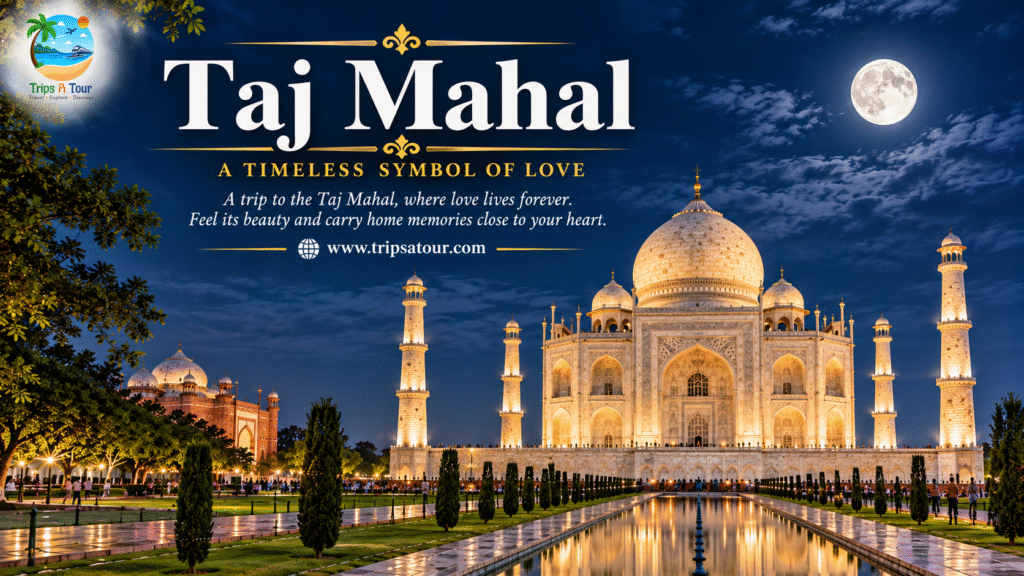
Taj Mahal Exciting Tour – Discover India’s Most Beautiful Wonder
Explore the iconic white marble monument, learn its fascinating history, and experience Agra’s charm.
Love has the power to create memories that remain alive forever. Sometimes, those memories live in our hearts, and sometimes, they become something so extraordinary that the whole world comes to admire them.
The Taj Mahal is one such beautiful symbol of love.
Standing gracefully beside the Yamuna River in Agra, this magnificent white marble monument tells a story that has touched hearts for centuries.
Built by Mughal Emperor Shah Jahan in memory of his beloved wife Mumtaz Mahal, the Taj Mahal is not only famous for its breathtaking beauty but also for the emotions and history connected to it.
A trip to the Taj Mahal is much more than visiting a world – famous monument.
It is a journey through a timeless love story, India’s rich Mughal history, remarkable architecture, and incredible craftsmanship.
From the moment you see its beautiful white dome rising beyond the grand entrance, you understand why this place continues to attract millions of visitors from around the world.
Whether you travel with family, friends, or someone special, the Taj Mahal offers beautiful memories.
With Agra’s delicious food, comfortable stays, and nearby attractions, your trip becomes even more special.
The Beautiful Story Behind the Taj Mahal
The Taj Mahal is widely recognised as a symbol of love, but its story is also connected with India’s history, Mughal culture, and remarkable architectural achievements.
Built with white marble, this magnificent monument carries the memories of two people whose story became part of world heritage.
Love Story of Shah Jahan and Mumtaz Mahal
The story of the Taj Mahal begins with Mughal Emperor Shah Jahan and his beloved wife Mumtaz Mahal, whose original name was Arjumand Banu Begum.
Shah Jahan and Mumtaz Mahal shared a close relationship. She was his trusted companion and remained an important part of his personal and royal life.
Their relationship became the inspiration behind one of the most beautiful monuments ever created.
In 1631, Mumtaz Mahal passed away in Burhanpur while giving birth to their fourteenth child. Her death deeply affected Shah Jahan.
According to historical accounts, the emperor decided to build an extraordinary mausoleum in her memory.
He wanted to create something that would preserve her memory for generations. That vision eventually became the Taj Mahal, a monument admired for its beauty, artistic details, and emotional significance.
Why Was the Taj Mahal Built?
It was commissioned by Shah Jahan as the final resting place of Mumtaz Mahal. Construction began in 1632, and the principal mausoleum was completed in 1648.
The surrounding buildings, gardens, and other parts of the complex were completed around 1653.
Thousands of skilled artisans, architects, stone-cutters, calligraphers, and craftsmen contributed to its construction.
Some remarkable features of the monument include:
- White marble brought from Makrana in Rajasthan.
- Beautiful floral patterns created using semi-precious stones.
- Detailed marble carvings and decorative calligraphy.
- A magnificent central dome surrounded by four minarets.
- Beautiful gardens designed in the traditional Mughal Charbagh style.
Shah Jahan was later buried beside Mumtaz Mahal inside the mausoleum.
Today, the Taj Mahal represents love, artistic excellence, and India’s rich architectural heritage. It became a UNESCO World Heritage Site in 1983 and continues to inspire millions of visitors.
Why This Place Should Be on Every Indian’s Travel List
India has countless beautiful destinations, historical forts, ancient temples, and cultural landmarks. However, the Taj Mahal holds a special place among them.
Every Indian should consider visiting this magnificent monument at least once.
Here are some reasons why a Taj Mahal trip deserves a place on your travel list.
- Experience India’s Rich History: Discover the Mughal era, its traditions, and historical achievements through this magnificent monument.
- Appreciate India’s Architectural Heritage: Admire the beautiful marble carvings, grand dome, and detailed craftsmanship of Mughal architecture.
- Feel the Story Behind the Monument: Experience the timeless love story of Shah Jahan and Mumtaz Mahal through this remarkable creation.
- Take Pride in India’s Cultural Heritage: Explore one of India’s most celebrated landmarks and appreciate its importance to world heritage.
- Enjoy a Memorable Family Holiday: Create beautiful memories with family and friends while exploring Agra’s history, food, and attractions.
- Explore More of Agra: Discover other historical monuments, beautiful gardens, local markets, and traditional food beyond the Taj Mahal.
Major Attractions to Explore
The Taj Mahal complex includes more than the famous white marble mausoleum. Its beautiful gardens, grand entrance, mosque, guest house, and decorative details deserve attention.
Here are the major attractions you should explore during your visit.
The Main White Marble Mausoleum
The main mausoleum is the most famous part of the Taj Mahal. Its magnificent dome, detailed arches, and beautiful marble surfaces create an unforgettable view.
Inside, visitors can see the cenotaphs of Mumtaz Mahal and Shah Jahan, surrounded by an intricately carved marble screen. Their actual graves are located in the chamber below.
The Great Gateway
The Great Gateway, also known as Darwaza-i-Rauza, is the impressive entrance to the main garden. Its red sandstone structure features beautiful decorative patterns and inscriptions.
Walking through this gateway and seeing the Taj Mahal appear in front of you is one of the most memorable moments of the visit.
The Charbagh Garden
The beautiful garden surrounding the Taj Mahal follows the traditional Mughal Charbagh design. It is divided into four sections by pathways and water channels. The green lawns, trees, fountains, and reflecting pools create a peaceful atmosphere.
- The Four Minarets
Four elegant minarets stand around the main marble platform. They add balance and symmetry to the structure and are among the most impressive features of Mughal architecture.
The Mosque and Guest House
Two red sandstone buildings stand on either side of the main mausoleum. One is a mosque, while the other is commonly known as the guest house. Their matching designs maintain the overall symmetry of the Taj Mahal complex.
The Marble Inlay Work
One of the most fascinating features of the Taj Mahal is its detailed marble inlay work, known as Parchin Kari or Pietra Dura. Artisans carefully placed colourful semi-precious stones into white marble to create beautiful floral and geometric patterns.
The Taj Museum
The Taj Museum is another interesting place to explore. It displays historical objects, architectural drawings, and information related to the monument and its construction. Check its opening hours before planning your visit.
How to Reach the Taj Mahal
Reaching the Taj Mahal is convenient because Agra is well connected to major Indian cities through airways, railways, and road networks. Whether you are travelling from Delhi, Kolkata, Mumbai, Jaipur, Lucknow, or another part of India, you can choose a travel option according to your budget, available time, and comfort.
The Taj Mahal is located in Agra, Uttar Pradesh, on the southern bank of the Yamuna River. Once you reach Agra, local transportation is easily available to take you to the monument.
Here are the different ways to plan your journey.
By Air
Travelling by air is a convenient option for visitors coming from distant cities. Agra has its own airport, known as Kheria Airport or Agra Airport. However, commercial flight services are limited, so travellers should check the available routes and schedules before booking.
Another convenient option is to fly to Indira Gandhi International Airport in New Delhi. Delhi has better domestic and international flight connections with major Indian cities.
After reaching Delhi Airport, you can continue your journey to Agra by train, bus, private taxi, or rental car.
- Nearest airport: Agra Airport (Kheria).
- Alternative airport: Indira Gandhi International Airport, New Delhi.
- Agra Airport to Taj Mahal: Approximately 13 km by road, depending on the route.
- Delhi Airport to Agra: Approximately 230 – 240 km by road.
Travel tip: If you are travelling from Kolkata, Mumbai, Bengaluru, or another distant city, compare flights to Delhi and Agra before making your booking. Delhi generally offers more flight options.
By Train
Travelling by train is one of the most popular and convenient ways to reach Agra. The city has railway connections with several major Indian destinations, making it suitable for families, couples, students, and solo travellers.
Agra has multiple railway stations, but Agra Cantt (AGC) is the main station commonly used by tourists. Other stations include Agra Fort and Raja Ki Mandi.
Some popular trains connecting Delhi and Agra include:
- Gatimaan Express: A fast train service between Delhi and Agra.
- Shatabdi Express: A comfortable option for travellers looking for a convenient journey.
- Taj Express: Another popular train service connecting Delhi and Agra.
- Other express trains: Several regular trains connect Agra with different Indian cities.
For travellers from Kolkata: You can check trains connecting Kolkata or Howrah with Agra Cantt. Depending on the train and route, the journey may take approximately 18–24 hours or longer.
After reaching Agra: You can hire an auto-rickshaw, taxi, or app-based cab from the railway station to reach your hotel or the Taj Mahal.
Travel tip: Book your railway tickets through the official IRCTC website. Check the arrival station carefully because different trains may stop at different Agra stations.
By Road
If you enjoy road trips, travelling to Agra by car or bus can be a wonderful experience. The city is connected to several major destinations through national highways and expressways.
The Yamuna Expressway is one of the most convenient routes for travellers coming from Delhi. It provides a direct road connection between Greater Noida and Agra.
You can choose from different road travel options:
- Private car: Suitable for families and groups who prefer a flexible travel schedule.
- Rental taxi: A convenient choice for visitors who do not want to drive themselves.
- Government buses: A budget-friendly option connecting Agra with nearby cities.
- Private buses: Available on selected routes, with different seating and comfort options.
Approximate road distances from major cities:
| Starting city | Approximate distance |
| Delhi | 230 km |
| Jaipur | 240 km |
| Lucknow | 335 km |
| Gwalior | 120 km |
| Mathura | 60 km |
| Bharatpur | 60 km |
Travel time depends on traffic, road conditions, and the starting location. For a comfortable road journey, plan breaks and check the route before departure.
Travel tip: If you are travelling with family or friends from Delhi or Jaipur, a private car can make your Agra sightseeing trip more flexible.
Local Transportation – Reaching the Taj Mahal from Agra
Once you reach Agra, travelling to the Taj Mahal is relatively easy. The city offers several local transportation options for tourists.
- Auto-rickshaws: Convenient for short-distance travel and reaching nearby attractions.
- Cycle rickshaws: Suitable for exploring local streets and nearby markets.
- App-based cabs: Useful for comfortable travel between hotels, railway stations, and tourist attractions.
- Private taxis: A good option for families and visitors planning a full-day sightseeing tour.
- Battery-operated vehicles: Available near designated Taj Mahal entry points to help visitors reach the monument.
One important thing to remember is that petrol and diesel vehicles are restricted within approximately 500 metres of the Taj Mahal to help protect the monument from pollution. Visitors should use designated parking areas and approved transportation facilities.
Where to Stay and What to Eat
A comfortable hotel and good food can make your Agra holiday even more enjoyable. The city offers different accommodation options and a wonderful food culture influenced by its Mughal history and traditional North Indian cooking.
Where to Stay in Agra
Luxury Hotels
Agra has several premium hotels offering comfortable rooms, restaurants, swimming pools, and excellent hospitality. Some properties also provide beautiful views of the Taj Mahal.
These hotels are suitable for couples, families, and travellers looking for a relaxing holiday.
Mid-Range Hotels
Mid-range hotels provide a good balance between comfort and price. They are suitable for families and groups who want clean rooms, restaurant facilities, and convenient access to tourist attractions.
Budget Hotels and Guesthouses
Budget accommodation is suitable for students, solo travellers, and visitors who want to manage their travel expenses. Look for clean rooms, good guest reviews, safety, and convenient transportation.
Best Areas to Stay
- Fatehabad Road: Convenient for hotels, restaurants, and sightseeing.
- Taj Ganj: Suitable for budget accommodation and proximity to the Taj Mahal.
- Agra Cantt: Convenient for travellers arriving by train.
- Sadar Bazaar area: Suitable for shopping and exploring local food.
Famous Food to Try in Agra
A trip to Agra is incomplete without enjoying its traditional food. From delicious breakfasts to famous sweets and Mughlai dishes, the city offers many flavours worth experiencing.
- Agra Petha: One of the city’s most famous sweets, prepared using ash gourd and sugar. It comes in different varieties, including plain, kesari, and angoori petha.
- Bedai and Aloo Sabzi: A popular breakfast combination featuring crispy fried bread served with spicy potato curry. Many local eateries also serve it with hot jalebis.
- Mughlai Cuisine: Try dishes such as kebabs, biryani, chicken curry, tandoori items, naan, and other traditional preparations.
- Agra Chaat: Enjoy local snacks such as aloo tikki, dahi bhalla, gol gappe, and raj kachori.
- Dal Moth: A crunchy and spicy local snack prepared using lentils, spices, and other ingredients. It is also a popular item to carry home.
You can explore traditional food outlets around Sadar Bazaar, Fatehabad Road, and Taj Ganj. Choose hygienic restaurants and safe drinking water during your trip.
How Many Days Are Enough for a Taj Mahal Trip?
A 2-3 day trip is generally enough to explore the Taj Mahal and the major attractions of Agra comfortably.
Here is a suggested three-day itinerary.
Day 1 – Arrival and Local Sightseeing
- Reach Agra and check into your hotel.
- Enjoy a traditional breakfast or lunch.
- Visit Agra Fort and explore its historical architecture.
- Explore local markets and handicraft shops.
- Enjoy traditional Agra food in the evening.
Day 2 – Explore the Taj Mahal
- Wake up early and visit the Taj Mahal around sunrise.
- Explore the main mausoleum, gardens, gateway, and marble carvings.
- Enjoy breakfast after returning to your hotel.
- Visit Itimad-ud-Daulah’s Tomb, popularly known as Baby Taj.
- Spend the evening at Mehtab Bagh and enjoy the view of the Taj Mahal.
Day 3 – Explore More and Departure
- Enjoy breakfast and check out of your hotel.
- Visit Fatehpur Sikri if your departure schedule allows.
- Shop for Agra Petha, Dal Moth, and traditional handicrafts.
- Complete your journey with beautiful memories of Agra.
If you have limited time, a two-day trip is also possible. You can explore the Taj Mahal, Agra Fort, Baby Taj, and Mehtab Bagh according to your travel schedule.
Estimated Budget for a Taj Mahal Trip
A Taj Mahal holiday can be planned according to your budget and travel preferences. Your expenses will depend on your starting city, transport, accommodation, food, and sightseeing choices.
Here is an estimated budget for one person for a two-day, one-night trip within Agra. The cost of travelling to Agra from your home city is not included.
| Expense | Estimated Cost |
| Budget hotel (one night) | Rs. 1,000 – Rs. 2,000 |
| Food and refreshments | Rs. 600 – Rs. 1,000 |
| Taj Mahal entry | Rs. 50 |
| Local transportation | Rs. 400 – Rs. 800 |
| Other sightseeing tickets | Rs. 100 – Rs. 300 |
| Shopping and miscellaneous | Rs. 300 – Rs. 500 |
| Estimated Total | Rs. 2,450 – Rs. 4,650 |
These are approximate planning figures, not fixed prices. Actual expenses may vary depending on the season, hotel category, personal choices, and transport availability.
Travel Tips for Your Taj Mahal Trip
A little preparation can make your holiday more comfortable and enjoyable. Keep these useful travel tips in mind before starting your journey.
- Choose the Right Season: October to March is generally the best time for comfortable sightseeing.
- Visit Early: Plan a sunrise visit to enjoy beautiful views and pleasant weather.
- Book Tickets Online: Purchase entry tickets through the official website and check visiting hours in advance.
- Choose Suitable Accommodation: Book a hotel near Fatehabad Road or Taj Ganj according to your budget.
- Wear Comfortable Clothes: Choose suitable clothing and footwear for walking around the monument.
- Carry Essentials: Keep your ID, tickets, drinking water, and necessary personal items.
- Use Local Transport: Choose authorised transport facilities to reach the Taj Mahal entrance.
- Try Local Food: Enjoy Agra’s famous Petha, Bedai, Dal Moth, and Mughlai dishes.
- Explore Nearby Attractions: Include Agra Fort, Baby Taj, and Mehtab Bagh in your sightseeing plan.
- Respect the Heritage: Follow visitor rules, avoid littering, and help preserve the monument’s beauty.
Note:
A trip to the Taj Mahal is more than a sightseeing experience. Its beautiful architecture, touching love story, and rich history make it a special part of India’s heritage.
Plan your visit to Agra, explore its historical attractions, enjoy local food, and create memories that last a lifetime.
The Taj Mahal is not just a monument to admire; it is a timeless story of love, history, and India’s heritage.