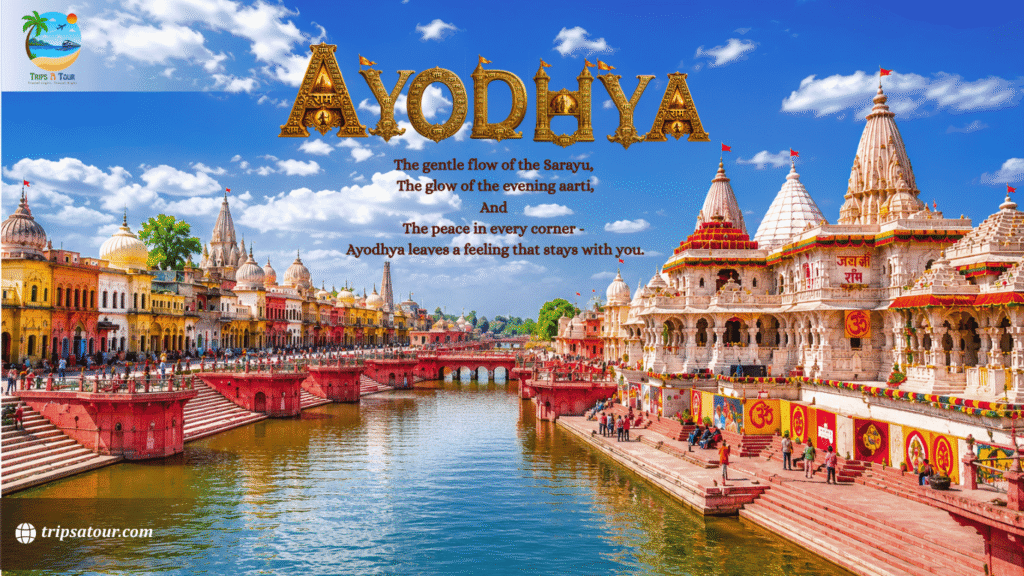
Ayodhya welcomes travellers with an aura that feels straight out of an epic tale. The city sits gracefully on the banks of the Saryu River, where ghats shimmer in the morning light and temple spires touch the sky.
Every corner whispers stories from the Ramayana, making the place feel alive with centuries of faith and legend.
This place is more than just a pilgrimage site. Ayodhya, believed to be Lord Ram’s birthplace, is one of India’s most revered sites.
But beyond its spiritual importance, it’s a cultural mosaic, where history, mythology, and living traditions meet.
For visitors, Ayodhya offers more than sacred shrines. Photographers find their frames in the bustling ghats, while history lovers dive into its museums.
Families enjoy walking through colourful markets lined with sweets and handicrafts. The city is a blend of devotion and discovery.
Ayodhya has much to offer – be it a short tour, a family pilgrimage, or a spiritual retreat. This guide covers routes, stays, food, top sights, travel plans, and tips for a smooth trip.
Why Ayodhya is Famous – the Pull for Travellers
People celebrate Ayodhya as Ram Janmabhoomi, the birthplace of Lord Ram. It holds a central place in the epic Ramayana. Every lane and ghat here echoes with stories of divine heritage. This makes it one of the most revered spiritual cities in India.
For centuries, Ayodhya has been a hub of faith, art, literature, and even political movements. Its temples, traditions, and festivals showcase the living culture of Hinduism and draw pilgrims, historians, and culture-seekers alike.
The consecration and opening of the magnificent Ram Mandir has transformed Ayodhya into a global pilgrimage hotspot. The temple’s architecture, rituals, and spiritual aura are the centerpiece of the city. It symbolizes both devotion and cultural pride.
Since the opening of the Ram Mandir, Ayodhya has seen a huge rise in visitors. People are coming from all over India and the world. Today, it is not only a holy city. It is also a major destination for religious tourism, heritage exploration, and cultural travel.
Quick Facts (Snapshot)
- Location: Ayodhya lies in the heart of Uttar Pradesh, within the culturally rich Awadh region.
- Sacred River: The Saryu (or Sarayu) River flows through the city. It serves as its spiritual lifeline and the backdrop for many rituals and festivals.
- Nearest Airports: Ayodhya has its own modern airport, opened in early 2024, offering direct flights from major cities. Lucknow Airport, about 130 km away, acts as a larger hub with wider connectivity. The new Ayodhya airport crossed the one-million passenger mark in its first year, boosting tourism convenience.
- Best Time to Visit: October to March brings pleasant weather, perfect for temple visits and riverfront walks. The October/Diwali season is magical, with Deepotsav lighting the city with thousands of lamps.
How to Reach Ayodhya
Ayodhya is now one of the most accessible pilgrimage cities in North India. New infrastructure and improved connectivity have made travel easier. Whether by flight, train, or road, reaching Ayodhya is convenient and well-organised.
By Air
The fastest and most comfortable way to reach Ayodhya is by flight. Maharishi Valmiki International Airport, Ayodhya Dham (AYJ), serves the city in early 2024, now serves the city. It connects Ayodhya directly with major cities like Delhi, Mumbai, Bangalore, and Kolkata.
From the airport, the main temple and city center are just a short drive away. Taxis, buses, and hotel shuttles are readily available.
If you don’t find a direct flight, you can consider Lucknow Airport. Lucknow’s Chaudhary Charan Singh International Airport is about 135 km away. From Lucknow, you can take a taxi, bus, or train to Ayodhya in 2 – 3 hours.
By Train
Ayodhya is a major stop on North Indian railway routes. Train travel is a popular choice for pilgrims and tourists. The city has two main stations:
- Ayodhya Junction (AY)
- Ayodhya Cantt (formerly Faizabad Junction)
Trains from Delhi, Varanasi, Lucknow, Gorakhpur, and Prayagraj run frequently, offering both budget and premium travel options. For a hassle-free journey, choose a train that arrives in the morning or daytime. This way, you’ll have more time to settle in before visiting the temples.
By Road
For travellers who enjoy road trips, Ayodhya is well connected by highways:
- From Lucknow: approx. 135 km (2.5 – 3 hours via NH27/NH330)
- From Varanasi: approx. 200 km (4 – 5 hours)
- From Gorakhpur: approx. 150 km (3 – 4 hours)
- From Prayagraj: approx. 170 km (4 hours)
Both state-run buses (UPSRTC) and private buses operate regular services from nearby cities to Ayodhya. Taxis and self-drive cars are also good options, especially if you are travelling with family. Recent upgrades have smoothed the roads leading to the city, making travel easier.
Where to Stay – Accommodation and Facilities
Ayodhya today offers a wide mix of accommodation, ranging from simple pilgrim lodges to modern hotels. Whether you are a backpacker on a budget or a family on a religious tour, there’s something for you. Travelers seeking comfort with a cultural touch will also find their style here.
Pilgrim Dharmshalas & Guest Houses
Ideal for devotees and budget travellers. Run by temple trusts or private owners, these lodges are simple, clean, and located close to major temples and ghats. They usually provide vegetarian meals or access to nearby eateries.
Mid-range Hotels (3★ – 4★)
These are the most popular choice for tourists. They offer air-conditioned rooms, Wi-Fi, in-house dining, and concierge services. You can easily reach many of them from the Ram Mandir and central market. Some hotels also arrange guided darshan, local sightseeing, and transport to the ghats.
Heritage & Boutique Stays
Perfect for travellers who want more than just a bed. You will often find these stays as converted havelis or modern boutique hotels decorated in Awadhi style. They give a homely yet premium feel and sometimes include cultural evenings or devotional music sessions.
Trust and Temple-Managed Stays
With the opening of the Ram Mandir, the Shri Ram Janmabhoomi Teerth Kshetra Trust has expanded accommodation facilities. State tourism authorities have also improved lodging options for visitors. These stays are particularly useful for pilgrims seeking proximity to the temple and reliable arrangements during peak seasons.
Luxury & Upcoming Resorts
As Ayodhya emerges as a global tourism hub, developers are building premium hotels and resorts. These properties cater to travellers who want maximum comfort – spacious rooms, spa facilities, fine dining, and airport transfers.
Pro tip: Always book your hotel in advance, especially during major festivals like Ram Navami, Deepotsav, or Diwali. Ayodhya attracts lakhs of pilgrims during these times. For a quieter stay, choose hotels a little away from the main temple complex, but still within a 10 – 15 minute drive.
Food & Eating Out in Ayodhya
Ayodhya’s food culture is as soulful as its temples – simple, devotional, yet deeply satisfying. Travellers here will find that food isn’t just about taste; it’s part of the spiritual experience. Here’s what to expect:
- Temple & Community Meals: Many temples, including Ram Mandir and Sita Ki Rasoi, serve prasad bhoj. These are pure vegetarian, sattvic meals prepared without onion or garlic. Eating here is more than filling your stomach; it’s about being part of the city’s devotional rhythm.
- Local Street Delights: Stalls pack the lanes around Hanuman Garhi and the ghats. They sell chaat, samosas, kachoris, jalebis, and lassi. Fresh peda and laddoos are popular temple offerings and also double up as edible souvenirs for tourists.
- Awadhi Cuisine: For travellers who want more than snacks, Ayodhya offers a taste of the wider Awadh region. Some mid-range and upscale hotels serve Awadhi pulao, kebabs, dal, and rich rotis. A great way to blend pilgrimage with indulgence.
- Sweet Spots: Don’t miss Ayodhya’s traditional peda – soft, caramel-hued, and often packed in temple-style boxes. Perfect for gifting or munching on your return journey.
- Modern Cafes & Restaurants: With tourism booming, Ayodhya has started seeing casual restaurants and air-conditioned cafés. They offer North Indian, South Indian, and fast food options. These are good choices for families or international travellers who prefer a mix of local and familiar flavors.
Traveller tip: Stick to busy shops and freshly made food for hygiene. Carry your own water bottle (many hotels offer refilling options). If you’re eating at temple kitchens, follow the customs and sit on the floor. Accept prasad respectfully and avoid wastage.
Top Places & Experiences in Ayodhya
Ram Janmabhoomi & Ram Mandir –
The heart of Ayodhya, this majestic temple is the birthplace of Lord Ram and a symbol of devotion. Marvel at its intricate architecture, attend the daily aarti, and immerse yourself in the spiritual atmosphere. Don’t forget to check online for darshan bookings to avoid long queues.
Saryu Ghats & Sunrise Boat Rides –
The Saryu River offers a serene backdrop to Ayodhya’s spiritual landscape. Start your day with a tranquil boat ride at sunrise or join the morning aarti at the ghats. Photography enthusiasts will love the golden reflections of temples in the calm waters.
Hanuman Garhi –
A small hill cradles this temple, where devotees worship Lord Hanuman. It offers panoramic views of the city and the river. The climb is short but rewarding, and the evening aarti is a mesmerizing experience for both pilgrims and tourists.
Kanak Bhawan –
Often called the palace of Sita and Ram, Kanak Bhawan is famous for its beautiful carvings and colorful idols. Visitors can explore its peaceful courtyards and soak in the royal aura blended with devotion.
Nageshwarnath Temple & Treta Ke Thakur –
These ancient shrines are steeped in legend. King Dasharath, Ram’s father, built Nageshwarnath. Treta Ke Thakur holds stories from the Ramayana. Both sites offer a glimpse into Ayodhya’s deep mythological heritage.
Tulsi Smarak Bhawan & Ram Katha Museum –
For travellers interested in literature and culture, this museum showcases Tulsidas’ life and the Ramcharitmanas. You can enjoy interactive exhibits, learn about the Ramayana’s history, and explore cultural performances on special days.
Guptar Ghat & Mani Parvat –
Ideal for quiet reflection, these spots are slightly off the beaten path. Visitors enjoy the serene riverside ambience at Guptar Ghat. Mani Parvat offers a panoramic viewpoint perfect for photography and watching the sunset.
Local Markets & Souvenirs –
Don’t miss exploring Ayodhya’s bustling markets near the ghats and temples. These markets offer handcrafted idols and religious artifacts. You can also enjoy traditional sweets like pedas and laddus, giving a taste of local life and culture.
Festivals & Cultural Events –
If your visit coincides with festivals like Deepotsav or Ram Navami, the city lights up with lamps and processions. Cultural performances during these times make the experience truly unforgettable.
Booking Darshan & Passes
To manage the large influx of devotees and tourists, darshan at the Ram Mandir now requires prior planning. Visitors can secure their spot by registering online through the official Shri Ram Janmabhoomi Teerth Kshetra portal. There are different types of darshan passes:
- Regular Darshan – Pilgrims must book early as slots and timings are limited.
- Sugam Darshan – designed for elderly or differently-abled visitors, offering a smoother, less crowded experience.
- VIP/Special Darshan – faster entry with additional privileges such as priority seating and guided assistance.
How to book:
- Visit the official website or app.
- Select the date and type of darshan.
- Fill in your personal details and ID proof.
- Receive a digital confirmation or pass, which you need to carry (printed or digital) on the day of your visit.
Important Tips:
- Carry a valid government ID that matches your booking details, as staff will check it at entry.
- Book well in advance, especially during peak seasons like Diwali or major festivals.
- The portal releases slots regularly, so check it for availability updates.
- If you miss an online booking, some on-site counters may offer limited walk-in passes. These passes are highly competitive and not guaranteed.
This system ensures a smooth and organized darshan experience. It reduces long queues, making your visit more comfortable and memorable.
Suggested Planning for Ayodhya
2-Day Quick Trip
Ideal for travelers with limited time who want to cover the must-see highlights.
Day 1 – Arrival & Spiritual Immersion
- Morning: Arrive in Ayodhya, check into your hotel, and freshen up. Head straight to Ram Janmabhoomi / Ram Mandir for your first darshan. Book your slot online in advance.
- Afternoon: Enjoy a traditional Awadhi lunch at a nearby restaurant. Visit Kanak Bhawan, a beautiful palace-temple dedicated to Lord Ram and Sita. Kanak Bhawan showcases ornate architecture and a golden interior.
- Evening: Take a leisurely stroll along the Saryu Ghats and witness the mesmerizing evening aarti. Optionally, enjoy a short boat ride on the Saryu River to soak in the serene surroundings.
Day 2 – Culture & Heritage Exploration
- Morning: Start early with a visit to Hanuman Garhi, a hilltop temple offering panoramic views of the city. Then head to Nageshwarnath Temple and Treta Ke Thakur, both linked to Ramayana legends.
- Afternoon: Explore Tulsi Smarak Bhawan to learn about the city’s cultural heritage. Visit the Ram Katha Museum to discover its literary legacy. Take some time for shopping in the local markets for souvenirs and religious items.
- Evening: Depart from Ayodhya or relax at your hotel before leaving.
3-Day Leisure & Cultural Tour
Perfect for travellers who want a deeper experience with a mix of spirituality, sightseeing, and leisure.
Day 1 – Arrival & Major Temples
- Morning: Arrive and check into your hotel. Begin your trip with a visit to Ram Janmabhoomi / Ram Mandir for darshan.
- Afternoon: Explore Kanak Bhawan, followed by a relaxing lunch. Stroll around nearby heritage lanes to experience the local vibe.
- Evening: Witness the enchanting Saryu aarti at the ghats and enjoy a riverside walk.
Day 2 – Ghats, Museums & Boat Rides
- Early Morning: Take a sunrise boat ride on the Saryu River. It is a magical experience for photography and peaceful reflection.
- Late Morning: Visit Guptar Ghat and Mani Parvat, serene spots away from the crowds.
- Afternoon: Explore Tulsi Smarak Bhawan and the Ram Katha Museum to understand the literary and historical context of Ayodhya.
- Evening: Optional cultural program or evening shopping in the local bazaars.
Day 3 – Temples & Departure
- Morning: Visit Hanuman Garhi for panoramic city views. Check out Nageshwarnath Temple or other nearby shrines.
- Afternoon: Leisurely lunch and last-minute shopping for souvenirs and sweets. Depart in the late afternoon or evening.
Ayodhya Trip Packages: Explore the Sacred City of Ram
Ayodhya is a destination where spirituality, history, culture, and timeless traditions come together.
Your trip may include:
- 1.Comfortable accommodation
- 2.Local sightseeing
- 3.Transportation assistance
- 4.Temple visits
- 5.Sarayu River experiences
- 6.Guided sightseeing options
- 7.Pickup and drop-off facilities
- 8.Customized travel plans
Whether you are traveling with family, friends, or a group of devotees, you can choose an itinerary based on your preferred travel duration and budget.
| Ayodhya Trip Package | Duration | Package Highlights | Best For |
|---|
| Ayodhya Darshan Package | 1 Day | Ram Mandir, Hanuman Garhi, Kanak Bhawan, Saryu River | Quick pilgrimage |
| Ayodhya Family Tour Package | 2 Days / 1 Night | Temple visits, local sightseeing, hotel stay, transportation | Families |
| Ayodhya Spiritual Tour | 5 Days / 4 Nights | Sri Ram Mandir, Hanuman Garhi, Kanak Bhawan, Ram Ki Paidi, Saryu Aarti | Devotees travelers |
| Ayodhya-Varanasi Tour Package | 4 Days / 3 Nights | Ayodhya temples, Varanasi ghats, Kashi Vishwanath area, Ganga Aarti | Pilgrims & culture lovers |
| Ayodhya-Chitrakoot Tour Package | 4 Days / 3 Nights | Ayodhya temples, Chitrakoot spiritual sites, local sightseeing | Religious travelers |
| Ayodhya Group Tour Package | 3–5 Days | Accommodation, group transportation, temple visits and sightseeing | Friends & large groups |
| Ayodhya Weekend Package | 2 Days / 1 Night | Major temples, Saryu River, evening sightseeing | Weekend travelers |
| Ayodhya Premium Tour Package | 3 Days / 2 Nights | Premium hotel, private transfers, sightseeing and personalized itinerary | Comfortable luxury travel |
| Customized Ayodhya Tour | Flexible | Personalized sightseeing, hotel, transport and additional destinations | Couples, families & groups |
Contact Us for Ayodhya Trip Package Prices
Looking for the right Ayodhya Trip Package for your journey? Contact us today to get the latest pricing, package inclusions, hotel options, transportation details, and customized tour plans. Our travel team can help you choose an itinerary that matches your budget, travel dates, and group size.
Get in touch with us today for complete package details and a personalized price quote.
Practical Tips for Travelers
- Book darshan and hotels early, especially around festivals (Deepotsav/Diwali attracts massive crowds).
- Carry ID – many darshan bookings require ID verification.
- Dress respectfully – light conservative clothing is ideal. People often remove their shoes at temples.
- Cash & UPI – both work; many stalls accept UPI, but carry some cash for small purchases.
- Photography – allowed at public ghats; temple interiors may restrict cameras – respect signs and priests.
- Crowd timings – mornings for serene ghats; late mornings and evenings for aarti; midday can be busy.
- Local transport – auto-rickshaws, e-rickshaws, app-cabs and pre-booked hotel cars; walking is pleasant in the old city core.
- Health – carry basic medicines, sun protection, and comfortable shoes for walking on steps/ghats.
Accessibility & facilities
Ayodhya’s recent renovation has focused on improving visitor facilities. Authorities have upgraded approach roads, restrooms, ramps in some areas, and floating bathing ponds. Some ghats now have accessible steps for seniors; check local updates for services.
Safety & responsible tourism
- Respect local religious customs and maintain decorum near temples and ghats.
- Keep personal belongings secure during crowded darshans.
- Avoid single, isolated walks late at night; stick to populated ghats and hotel areas.
- Support local vendors and community-run prasad kitchens – small purchases help the local economy.
Ayodhya is a city where mythology meets modern pilgrimage. Take your time to explore the ghats, temples, and local markets, and soak in the spiritual atmosphere. Plan ahead for darshan and accommodation, but leave room for quiet moments by the Saryu River. With respect, curiosity, and a relaxed pace, your Ayodhya trip will be memorable and deeply rewarding.