
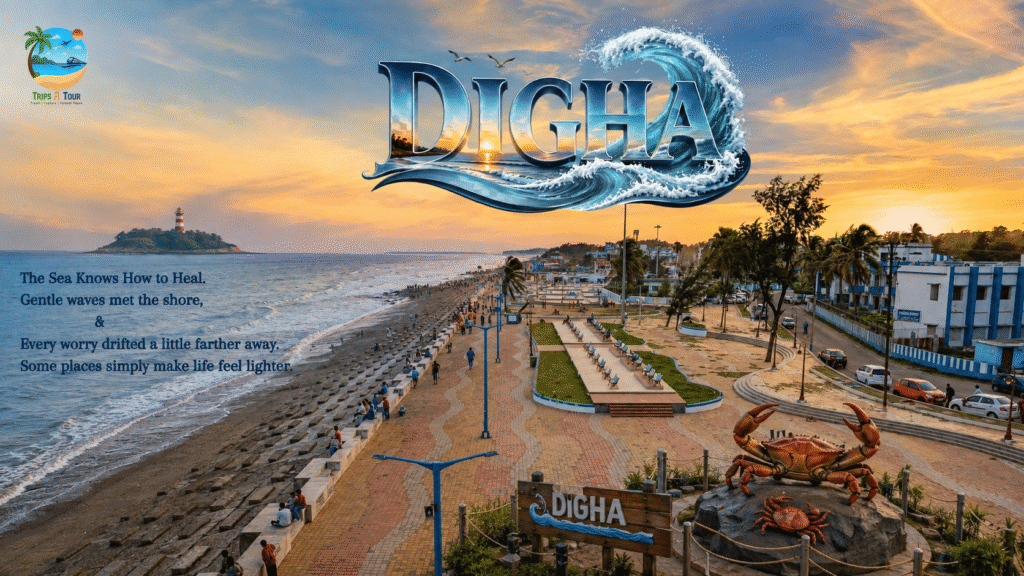
When the Bay of Bengal greets you with endless waves, golden sands, and a salty breeze, you know something special awaits. You’ve arrived at Digha – West Bengal’s most loved seaside escape.
Just a few hours away from Kolkata, this little coastal town is a popular getaway. It has been a favourite spot for tourists, families, and weekend travellers for decades.
What makes Digha truly special is its simplicity. A broad shoreline stretches far and wide. Pine trees stand tall along the coast. Roadside stalls sizzle with fresh seafood & the sea offers the timeless joy of both sunrise and sunset.
Unlike many over-commercialised beaches, Digha keeps its charm. It is comfortable yet simple. Travellers find neat promenades here & stays range from budget hotels to luxury resorts. Families enjoy attractions like aquariums and parks.
Short trips to Shankarpur and Talsari add more variety. The newly built Jagannath Temple brings a cultural touch. Together, Digha offers both beach relaxation and cultural tourism.
Be it a weekend escape or a lazy family holiday, Digha welcomes everyone. Couples, solo travellers, seafood lovers, and beach dreamers all find their happy place here.
Why Digha is Popular – The Quick Pitch
Digha’s charm lies in its simplicity and accessibility. People have long known it as the “Brighton of the East,” just a short trip from Kolkata. The wide sandy stretches, soothing coastal groves, and calm Bay of Bengal waves make it special.
For travellers, it’s the perfect blend of convenience and coastal beauty. It’s close enough for a weekend escape, yet refreshing enough to feel like a proper holiday.
Digha truly shines on Bengal’s tourism map for its diversity. Families love the safe, shallow waters and kid-friendly attractions, while couples enjoy peaceful sunrise walks on the beach. Foodies flock here for fresh prawns, crabs, and hilsa, and tourists of all ages enjoy the lively seaside markets and promenades.
Adding to its coastal beauty, the newly opened Jagannath Temple in Digha has become a shining landmark. This majestic temple has quickly become a major attraction, drawing visitors with its divine aura. Its impressive architecture and grandeur also light up the town’s skyline.
The temple adds a spiritual touch to Digha tourism, attracting both pilgrims and travellers. With this, Digha is no longer just a beach town but a destination of serenity and culture.
How to Reach Digha – Routes & Travel Tips
Getting to Digha is part of the fun, and the good news is that it’s super accessible from Kolkata and nearby towns. Travellers can choose between train, road, or bus depending on comfort and budget.
By Train (The easiest choice for tourists):
Direct trains run daily from Howrah and Santragachi stations to Digha Flag Station (DGHA). Popular ones include the Tamralipta Express, Kandari Express, and Howrah – Digha Super AC Express. The journey usually takes 3 to 4 hours, making it perfect for a weekend trip. Pro tip: if you’re planning during the festive season or winter holidays, book your tickets at least 2 – 3 weeks in advance.
By Road (For road trip lovers):
Digha lies about 180 – 190 km from Kolkata, and the drive via NH16 → NH116B is smooth and scenic. It takes around 4 – 5 hours by car, depending on traffic. Travellers often stop midway for tea breaks and snacks at highway dhabas, adding a fun “mini tour” feel to the journey.
By Bus or Taxi:
Regular state-run (WBSTC, SBSTC) and private buses connect Kolkata’s Esplanade to Digha throughout the day. Overnight sleeper coaches are also available. If travelling in a group, hiring a private taxi or cab can be comfortable and cost-effective.
By Air (Indirect option):
The nearest airport is Netaji Subhas Chandra Bose International Airport, Kolkata. From there, travellers can take a train or hire a cab to cover the remaining stretch.
Travel Tip: Morning trains and early drives are the best – you’ll reach Digha by late morning, check in, and still have half a day to enjoy the beach.
Where to Stay – Comforts for Every Traveller
Digha offers plenty of stay options to match every kind of traveller’s budget and mood. From low-cost guesthouses to mid-range sea-facing hotels and larger resorts, you’ll find the right fit without much hassle.
- Budget travellers & backpackers: Guesthouses, small lodges, and state-run WBTDCL hotels offer clean and reliable accommodation. They are pocket-friendly, perfect for budget travellers. Ideal for solo travelers, students, or short weekend trips.
- Mid-range comfort seekers: Most tourists choose hotels in New Digha or Old Digha. Both areas have popular options like Hotel Dolphin, Le Roi, Iconic Hotel Digha, and many family-friendly properties. These hotels usually offer AC rooms, in-house dining, and balconies with partial or full sea views.
- Families and groups: Resorts and larger hotels with bigger rooms are ideal for family stays. They often offer kids’ zones and ample parking spaces. They often provide banquet halls for gatherings and sometimes even private beach access.
- For peace-lovers: If you want quieter mornings, choose boutique hotels or homestays. Stay slightly away from the crowded promenade. These offer a calmer atmosphere while still keeping the sea within walking distance.
- Best location to cover all sides of Digha: Stay near Amarabati Park to easily explore Old Digha, New Digha, and the Jagannath Temple. Another good option is the midpoint stretch between Old and New Digha. From here, you can reach both beach areas in just 5 – 10 minutes by auto/car, and the Jagannath Temple is also nearby. Hotels here let you explore all attractions easily, ideal for first-time visitors.
Travel Tips:
- For peak season (October – February), book at least 2 – 4 weeks early.
- Check for basic amenities – hot water, 24/7 generator, Wi-Fi, and secured parking if you’re driving.
- Guests book sea-facing rooms the fastest. Grab them early if you want to wake up to the waves.
Local Transport & Getting Around
- Totos (e-rickshaws): The most convenient option for short hops is between the station and hotels. It also covers Old ↔ New Digha, Mohana, Science Centre, ropeway, and the market.
- Cycle-vans & autos: Available along beach roads and markets; negotiate beforehand.
- Day cab: Hire a full-day car for the side-trip circuit (Udaipur – Talseri – Shankarpur/Tajpur/Mandarmani).
Food – What to Eat & Where to Find It
One of the biggest joys of a Digha trip is the food – especially if you’re a seafood lover. The town thrives on the bounty of the Bay of Bengal, and almost every traveler ends up making food a highlight of their tour.
Seafood specialities: Expect the freshest catch of pomfret, bhetki (Asian seabass), prawns, crabs, and pabda. During the monsoon and just after, you might even find hilsa (ilish) on the menu – a treat for Bengali travelers. Chefs commonly fry dishes, like crispy golden pomfret fry or prawn cutlet, and grill them with light spices. Rich curries cooked in mustard paste and coconut milk are also popular.
Where to eat:
- Beach shacks & stalls – These line New Digha and Old Digha beaches. They serve hot, freshly fried fish straight from the fishermen’s nets. Do check cleanliness before eating, but the taste and freshness are unbeatable.
- Family-friendly restaurants & hotel kitchens – If you prefer comfort and hygiene, many mid-range and premium hotels are ideal. They often have in-house restaurants serving Bengali and continental meals. Popular mentions include the restaurant at Hotel Dolphin, Sea Hawk, and other reputed hotels.
- Local eateries & markets – Battala and New Digha Markets are great for homestyle thalis and fish curries. They also offer plenty of budget-friendly meal options.
Vegetarian options: Seafood rules here, but vegetarians can enjoy rice, dal, and aloo posto. Most bigger hotels and restaurants also serve Chinese and North Indian dishes.
Food tips for travellers:
- Always ask for the catch of the day – it’s fresher and often cheaper.
- If you like spicy food, request the local mustard (kasundi) to accompany your fish fry.
- Carry wet wipes or sanitizer if you’re trying food at stalls.
- For a truly local flavour, have at least one meal at a small Bengali eatery serving fish curry – rice.
Digha isn’t just about sea and sand. It also serves up a delicious coastal kitchen ready for you to explore.
Top Places & Experiences You Shouldn’t Miss in Digha
New Digha Beach & Old Digha Beach –
These are the heartbeats of Digha tourism. New Digha is wide, clean, and great for families who want to stroll, sit on the promenade, or try fun rides like horse carts and beach bikes. Old Digha, on the other hand, is rougher and more rugged, with giant boulders protecting the shore. Perfect for sunrise and sunset lovers, or those who enjoy the drama of crashing waves.
Digha Mohona (Fishermen’s Wharf) –
Where the Champa River meets the Bay of Bengal, you’ll find one of the liveliest corners of Digha. Colourful fishing boats, bustling fish markets, and locals bargaining over the morning catch make it a photographer’s paradise. Early morning visits are best for authentic vibes.
Marine Aquarium & Regional Centre (MARC) –
A surprise gem in Digha! This government-run aquarium has an impressive collection of marine species. It features rare fishes, corals, sea anemones, and even sharks. A great place to explore with kids or anyone curious about the underwater world.
Amarabati Park & Ropeway –
A landscaped garden in New Digha, perfect for evening relaxation. Paddle boating on the small lake and a ropeway ride offering bird’s-eye views of the sea and town are the highlights here.
Science Centre Digha –
A fun stop for travellers with children or science enthusiasts. Interactive exhibits, astronomy shows, and quirky models make it both entertaining and educational.
Side trips (great for Day-2/Day-3 loops)-
If you want to escape the crowds, take short trips to these quieter beaches around Digha.
- Casuarina trees and fishing boats dot Shankarpur, giving it a raw charm.
- Talsari, at the Odisha border, welcomes visitors with palm-fringed sandbanks and a calm, unspoiled environment.
- Udaipur Beach, just a few kilometres from Digha, is still relatively untouched and excellent for those who love solitude.
- Mandarmani: Long drivable coastline (access rules vary), ~29 – 31 km from Digha.
- Talsari, at the Odisha border, welcomes visitors with palm-fringed sandbanks and a calm, unspoiled environment.
Digha Jagannath Temple –
A newly built spiritual landmark that has quickly become a major attraction. Its structural beauty and peaceful surroundings add a cultural twist to your seaside trip. It’s worth a stop even if you’re not deeply religious.
Day-wise Itinerary Suggestions
Planning a trip to Digha is all about balancing sea-time, food cravings, and a few short excursions. Depending on how many days you can spare, here are three easy-to-follow travel plans:
Weekend Escape (2 Days)
Day 1 –
- Board an early train from Howrah and reach Digha by late morning.
- Check into your hotel and grab a seafood lunch.
- Spend the afternoon strolling along New Digha Beach and dipping your toes in the Bay of Bengal. Relax under the shade of casuarina trees.
- Visit the Marine Aquarium in the evening and round off the day watching a golden sunset from the beach promenade. Dinner = fish fry + prawns!
Day 2 –
- Wake up early for a sunrise walk at Old Digha Beach.
- Head to Mohona Watch Point to see the river-sea confluence and colourful fishing boats.
- If time permits, squeeze in a short trip to Shankarpur or Talsari Beach before catching your return train or bus to Kolkata.
Leisure Tour (3 – 4 Days)
Day 1 –
- Arrive at Digha, check in, and spend the first day unwinding by the sea.
- Evening stroll at the beach, try fried pomfret from local stalls.
Day 2 –
- Adventure day! Enjoy water sports like banana boat rides and parasailing (seasonal).
- Relax at the beach throughout the day.
- Evening visit to Amarabati Park for boating and a ropeway ride.
Day 3 –
- Start with the Marine Aquarium, then visit the Digha Science Centre.
- Afternoon shopping spree at Nehru Market or Battala Market for seashell crafts and souvenirs.
- Visit the newly built Jagannath Temple in the evening.
Day 4 (optional) –
- Day trip to Shankarpur or Talsari for a quieter beach experience.
- If you’d rather laze around, spend the day walking, sipping coconut water, and watching the sea change colours before heading home.
No matter if it’s a short weekend break or a longer coastal holiday, Digha adapts beautifully to your travel plans. With its beautiful beaches and fresh seafood, every visit feels special. Nearby attractions give you even more reasons to return.
Practical tips for travellers
Tides & swimming: Digha’s low-gradient beach is inviting, but currents can be deceptive. Swim only in designated zones and always heed lifeguards. Monsoon seas are rough; avoid venturing in when red flags are up.
What to pack:
- Light cottons, a sun-hat, sunglasses, high-SPF sunscreen.
- Flip-flops plus one pair of secure sandals (rocks at Old Digha).
- Rain jacket/umbrella in monsoon; mosquito repellent for evenings.
- Waterproof pouch for phones during beach and boat rides.
Money & connectivity: ATMs are available in both New and Old Digha. Mobile data is generally reliable in town areas but can be weak on out-of-town beaches.
Responsible tourism:
- Avoid plastic on the beach; use the many bins on the promenade.
- Don’t buy live or protected shells/coral.
- Respect fishing communities’ work areas at Mohana; ask before close-up photos.
- Keep a safe distance from the sea during high tide and storms.
Shopping & souvenirs
Shell craft, jute items, casuarina seed curios, conch souvenirs, and local pickles are widely sold near the beach markets. For seafood lovers, some shops will pack dried fish airtight-declare at home if needed.
Sample budgets (per couple, 2N/3D)
Transport (Kolkata – Digha – Kolkata):
- Train (CC/2S): ₹1,000 – ₹2,500 total depending on class and availability.
- AC bus: ₹800 – ₹1,600 per person (operator/season dependent).
- Cab/self-drive fuel & tolls: ₹4,500 – ₹7,000 roundtrip (vehicle & route variables).
- Stay: ₹5,000 – ₹10,000 (mid-range) for two nights; more for premium sea-facing rooms.
- Food: ₹1,800 – ₹3,000 for local meals & snacks.
- Sightseeing & activities: Ropeway/boating/toto hops ₹800 – ₹1,500 total.
(All figures are ballpark to help travellers plan a tour budget; actuals vary by season and choice.)
Why Digha works for every kind of tourist
- Families: Easy logistics, short travel time, beach + aquarium + science centre + ropeway = zero-stress fun.
- Friends & couples: Long walks, seafood nights, and scenic side trips to quieter shores.
- Pilgrim + leisure combo: Add the new Jagannath Temple to your itinerary without sacrificing beach time.
- Weekend warriors: With direct trains and highway access, 2N/3D is genuinely enough to unwind.
Final pro tips (little things that make a big difference)
- See the sea at multiple times: Experience both low tide (expansive sands) and high tide (thunderous waves).
- Sunrise person? New Digha/Udaipur are superb for that first light over the Bay; keep your camera ready.
- Eat local, fresh, and early: For seafood, lunch is best-day’s catch is in; evenings, graze on beach snacks and hot tea.
- Keep a flexible Day-3: Choose your side trip based on mood. Talseri offers quiet estuary vibes, Tajpur has fewer crowds, and Mandarmani is perfect for a longer sandy drive.
- Weekends & holidays: Book hotels and trains in advance; Digha is the quick getaway for Bengal travellers.
The Takeaway
Digha blends classic seaside nostalgia with new-age attractions, effortless access, and side trips that keep each tour fresh.
Whether you’re a first-timer planning a short weekend getaway, Digha is perfect for you. Even repeat travellers will enjoy its quieter beaches and the new Jagannath Dham. The town makes tourism simple, scenic, and satisfying. It’s exactly what you hope a beach break will be.

